How to transition your dog to homemade food
A step-by-step guide for switching diets safely
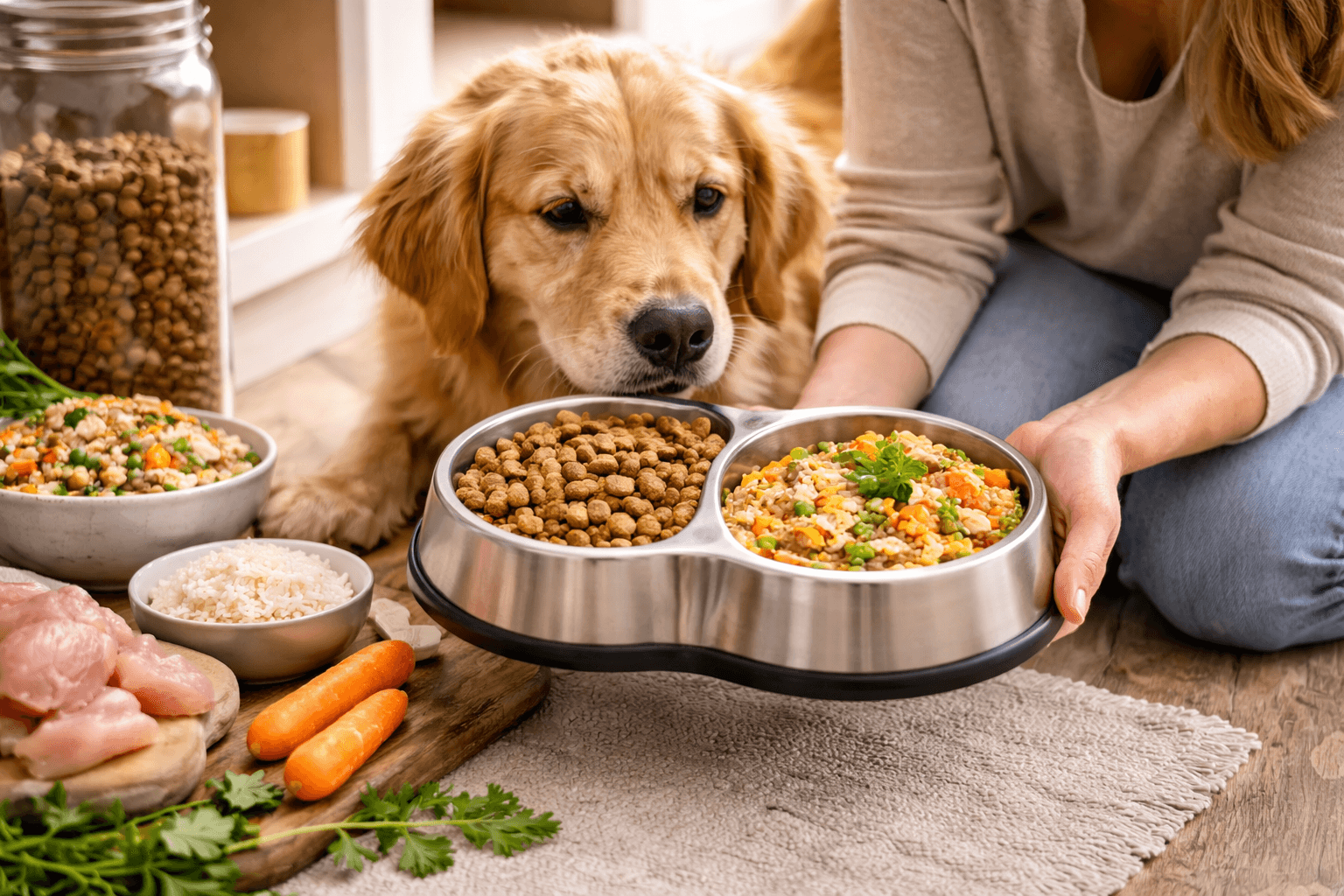
Changing your dog's diet suddenly can cause digestive upset. When introducing homemade food, it is important to transition slowly so your dog's digestive system has time to adapt.
A gradual transition helps prevent issues such as diarrhea, vomiting, or loss of appetite.
Recommended transition schedule
A simple 7-day transition plan works well for most dogs.
- Day 1–2
25% homemade food / 75% current food - Day 3–4
50% homemade food / 50% current food - Day 5–6
75% homemade food / 25% current food - Day 7+
100% homemade food
Signs the transition is going well
Healthy transitions usually include:
- stable digestion
- normal stool consistency
- healthy appetite
- good energy levels
If your dog adapts well, you can continue with homemade meals.
Signs you should slow down
Some dogs need more time to adjust.
Watch for symptoms such as:
- loose stools
- gas
- vomiting
- decreased appetite
If this happens, return to the previous transition step for a few days before progressing.
Start with simple recipes
Dogs transitioning to homemade food often tolerate simple meals best.
Common beginner ingredients include:
- chicken
- rice
- pumpkin
- carrots
- turkey
Meals with fewer ingredients make digestion easier during the transition phase.
Chicken and rice digestive bowl · Turkey and pumpkin digestive bowl
Final tip
Every dog adapts differently. A slow transition helps ensure the new diet supports your dog's digestive health rather than overwhelming it.