How much homemade dog food should you feed your dog?
A simple feeding guide based on dog weight
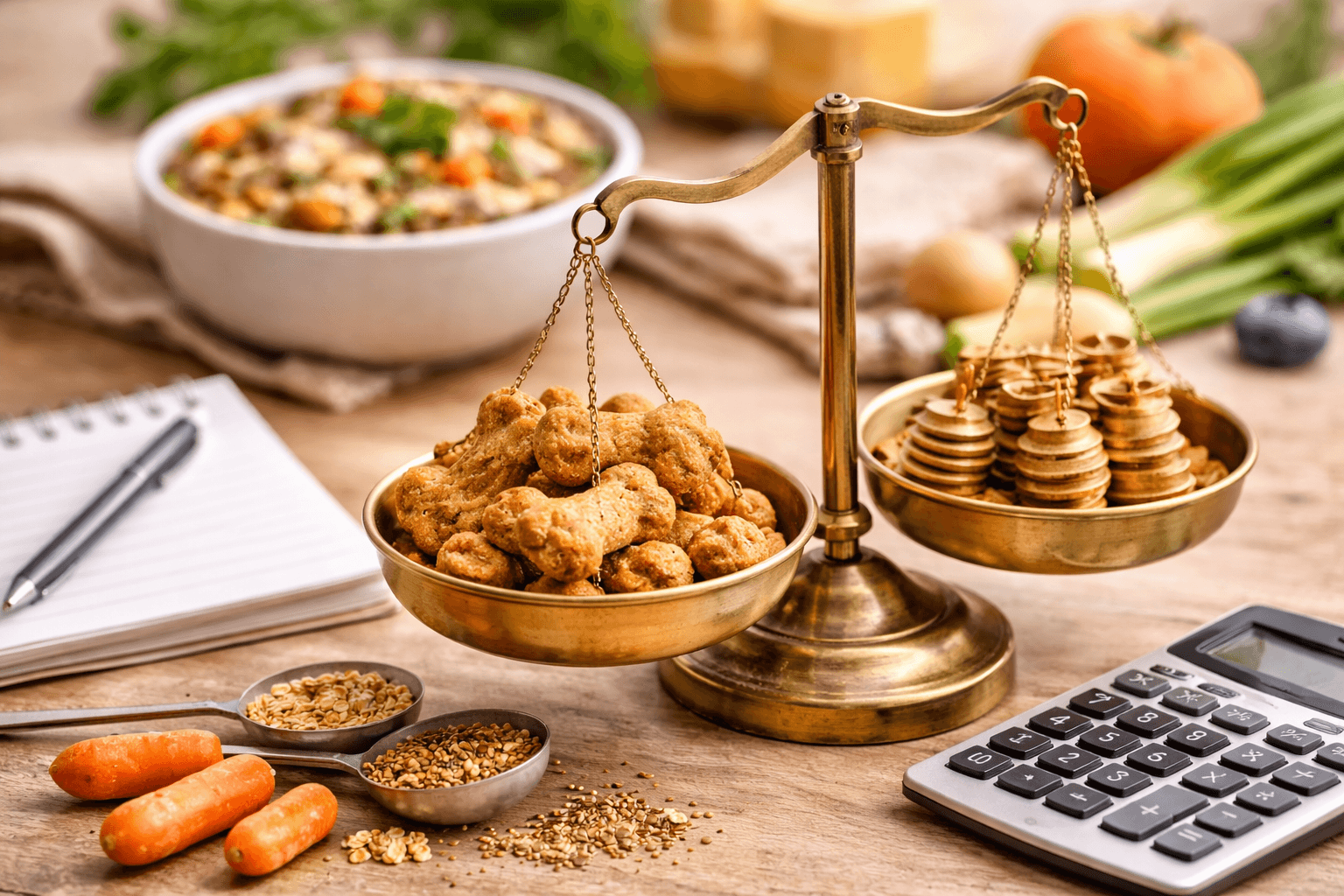
One of the most common questions dog owners ask when switching to homemade meals is:
How much food should I feed my dog?
The answer depends on several factors including weight, activity level, age, and metabolism.
General feeding guideline
A commonly used guideline is:
Dogs should eat about 2–3% of their body weight per day in food.
This can vary depending on activity level and health conditions.
Daily feeding estimate
| Dog Weight | Daily Food Amount |
|---|---|
| 5 kg (11 lbs) | 100–150 g |
| 10 kg (22 lbs) | 200–300 g |
| 20 kg (44 lbs) | 400–600 g |
| 30 kg (66 lbs) | 600–900 g |
Active dogs may require more calories, while less active dogs may require slightly less.
Factors that affect portion size
Activity level
Highly active dogs burn more calories and may require larger portions.
Age
Puppies often require more calories for growth.
Senior dogs may require fewer calories.
Body condition
If your dog is gaining weight, slightly reduce portion sizes.
If your dog appears underweight, increase portions gradually.
Using BarkyBowl recipes
Our recipes include ingredient quantities designed for typical dog sizes.
When preparing homemade meals, you can adjust portion sizes based on your dog's weight and daily calorie needs.
Examples include:
Monitor your dog's body condition
The best way to determine proper feeding amounts is by observing your dog's body condition.
Healthy dogs should:
- Have a visible waistline
- Have ribs that can be felt but not seen prominently
- Maintain stable energy levels
Final tip
If you are unsure about portion sizes or your dog has medical conditions, consult your veterinarian or a canine nutrition specialist.
Proper feeding ensures your dog receives the right balance of nutrients and calories.